
Fisheries and Aquatic Sciences
-
FAS 2024 | Sustainable Fisheries
COURSE DESCRIPTION
Fish biology, ecology and habitats relevant to fisheries on both a global and regional (Florida) scale. Follows the fisheries occurring from cold, mountain rivers to the depths of the oceans, with special topics (e.g., artificial reefs, fisheries bycatch and aquaculture). Intended for non-science and science majors
Credits: 3
DOWNLOAD SYLLABUS
LAB/FIELD COMPONENT
There are no labs or field trips associated with this course.
COURSE ATTRIBUTES
- face-to-face, spring, undergraduate
INSTRUCTOR(S)
-
FAS 4105C | Field Ecology of Aquatic Organisms
COURSE DESCRIPTION
This field-oriented course is intended to introduce students to the diverse aquatic habitats found in Florida, their associated flora and fauna, and serve as an introduction to the management issues facing state and federal conservation agencies. Students will gain an understanding of plant and animal community structure across a range of ponds, lakes, rivers, and nearshore coastal systems.
Credits: 4
Prerequisite: Junior or Senior standing
Summer A course
DOWNLOAD SYLLABUS
LAB/FIELD COMPONENT
This course includes required lab/field work.
COURSE ATTRIBUTES
- face-to-face, summer, undergraduate
INSTRUCTOR(S)
-
FAS 4014 | Aquaculture I
COURSE DESCRIPTION
Provides an overview of the field of aquaculture, including water quality, production systems, nutrition, spawning, and the common fish and invertebrate groups cultured in the United States. The course is entirely web-based, with video lectures followed by readings and other resources for each learning topic.
Credits: 3
DOWNLOAD SYLLABUS
LAB/FIELD COMPONENT
There are no labs or field work in this course.
COURSE ATTRIBUTES
- fall, graduate, online or flexible
INSTRUCTOR(S)
-
FAS 4175 | Algae Biology & Ecology
COURSE DESCRIPTION
An introduction to the geospatial technologies, concepts and methods required to analyze and manage geographic data used in a context of marine habitat mapping. Learn about the fields of cartography, remote sensing, and geographic information systems (GIS), and how to combine oceanography and marine ecology, geomorphology and biology in order to provide an accurate spatial representation of marine habitats.
Credits: 3
Prerequisites: BSC2010 and BSC2010L or equivalent
DOWNLOAD SYLLABUS
LAB/FIELD COMPONENT
There are no labs or field work in this course.
COURSE ATTRIBUTES
- online or flexible, spring, undergraduate
INSTRUCTOR(S)
-
FAS 4202C | Biology of Fishes
COURSE DESCRIPTION
Course will focus on the general biology of fishes, with emphasis on trends in their evolution, integrative and sensory biology, physiology, feeding ecology, reproduction, growth, and population dynamics as they relate to fisheries.
Credits: 4
Prerequisites: BSC 2011 and BSC 2011L
DOWNLOAD SYLLABUS
LAB/FIELD COMPONENT
This course involves online laboratory assignments and assessments.
COURSE ATTRIBUTES
- fall, online or flexible, undergraduate
INSTRUCTOR(S)
-
FAS 4224 | Applied Aquaculture Genetics
COURSE DESCRIPTION
The goal of this course is to provide students with the background knowledge and practical methodologies for the current technologies used for genetic improvement of fish and shellfish aquaculture and fishery resource management. This course will be a combination of online lectures, group discussions, and video demonstrations to keep students with the most updated advancements.
Credits: 3
Offered in odd years only.
DOWNLOAD SYLLABUS
LAB/FIELD COMPONENT
There are no labs or field work in this course.
COURSE ATTRIBUTES
- online or flexible, spring, undergraduate
INSTRUCTOR(S)
-
FAS 4270 | Marine Ecological Processes
COURSE DESCRIPTION
This course is intended to provide students with a broad overview of ecological processes operating in estuarine, near shore coastal and open ocean systems. Initially, students are introduced to important primary producers and secondary consumers in each of these systems. Insights into physiological and population levels of organization build on these basics. Environmental factors that influence species-specific and population level interactions are discussed subsequently as a transition to the concepts of community organization. The major chemical cycles in marine systems (e.g., carbon, nitrogen and phosphorus) are then discussed. All of this material forms a foundation for explaining how the structure and function of communities are maintained over different scales in both time and space.
Credits: 3
Prerequisites: instructor consent
DOWNLOAD SYLLABUS
LAB/FIELD COMPONENT
There are no labs or field trips associated with this course at this time.
COURSE ATTRIBUTES
- fall, online or flexible, undergraduate
INSTRUCTOR(S)
-
FAS 4271C | Invasion Ecology of Aquatic Animals
COURSE DESCRIPTION
A comprehensive overview of invasion ecology, highlighting aspects related to aquatic animals, including ecological concepts and debates underlying this developing field.
Credits: 3
Offered in even years only.
DOWNLOAD SYLLABUS
LAB/FIELD COMPONENT
There are no labs or field work in this course.
COURSE ATTRIBUTES
- online or flexible, spring, undergraduate
INSTRUCTOR(S)
-
FAS 4274 | Freshwater Ecology
COURSE DESCRIPTION
Provides an understanding of the concepts in freshwater ecology which are important for controlling the traits, distribution, and abundance of aquatic organisms. Focuses on the major groups of organisms found in freshwater habitats, the physical and chemical properties that are important for structuring freshwater communities, and the ecological processes that affect freshwater communities and ecosystems.
Credits: 3
DOWNLOAD SYLLABUS
- FAS 4274 - Freshwater Ecology Syllabus (Face-to-Face).pdf
- FAS 4274 - Freshwater Ecology Syllabus (Online).pdf
LAB/FIELD COMPONENT
- None.
COURSE ATTRIBUTES
- Online-or-flexible, fall, undergraduate
INSTRUCTOR(S)
-
FAS 4304C | Spatial Sciences for Marine Environmental Characterization
COURSE DESCRIPTION
An introduction to the geospatial technologies, concepts and methods required to analyze and manage geographic data used in a context of marine habitat mapping. Learn about the fields of cartography, remote sensing, and geographic information systems (GIS), and how to combine oceanography and marine ecology, geomorphology and biology in order to provide an accurate spatial representation of marine habitats.
Credits: 4
DOWNLOAD SYLLABUS
LAB/FIELD COMPONENT
This course has required labs that can be completed online or in person.
COURSE ATTRIBUTES
- face-to-face, fall, online or flexible, undergraduate
INSTRUCTOR(S)
-
FAS 4305C | Intro to Fishery Science
COURSE DESCRIPTION
Principles of fish management in freshwater and marine systems. Includes field and laboratory techniques for aquatic habitat and fishery resource assessment, aquaculture practices and consideration of contemporary issues pertinent to sport and commercial uses of renewable fisheries resources.
Credits: 3
DOWNLOAD SYLLABUS
LAB/FIELD COMPONENT
This course includes required labs and field work.
COURSE ATTRIBUTES
- face-to-face, spring, undergraduate
INSTRUCTOR(S)
Dan Canfield Jr.
-
FAS 4364 | Marine Adaptations
COURSE DESCRIPTION
This course will examine and compare the physiological adaptations of marine, coastal, and estuarine invertebrates to environmental conditions. The processes examined will span several levels of organization, from ecological and organismal to cellular and molecular.
Examples will be drawn from rocky intertidal, salt marsh, coral reef, and deep sea habitats, among others
Credits: 3
Prerequisites: : BSC 2010 and 2011 or equivalent; courses in animal physiology and ecology are recommended.
DOWNLOAD SYLLABUS
LAB/FIELD COMPONENT
There are no labs or field work required for this course.
COURSE ATTRIBUTES
- fall, online or flexible, undergraduate
INSTRUCTOR(S)
-
FAS 4900 | Supervised Extension Experience
COURSE DESCRIPTION
Firsthand, authentic Extension experiences in fisheries and aquatic sciences under the supervision of a faculty member. Projects may involve program planning, development, implementation, and evaluation.
Credits: variable (1-3). Can be repeated with change of topic up to 6 credits.
Grading scheme: S/U
DOWNLOAD SYLLABUS
- n/a
LAB/FIELD COMPONENT
This course is individualized per student.
COURSE ATTRIBUTES
- face-to-face, fall, online or flexible, spring, summer, undergraduate
INSTRUCTOR(S)
Obtain approval from an FAS faculty member for supervision of these credits.
-
FAS 4905 | Individual Study
COURSE DESCRIPTION
Individual study of a selected topic in fisheries and aquatic sciences as contracted with the instructor at the start of the term.
Credits: variable (1-4). Can be repeated with change of topic up to 8 credits.
DOWNLOAD SYLLABUS
- n/a
LAB/FIELD COMPONENT
This course is individualized per student.
COURSE ATTRIBUTES
- face-to-face, fall, online or flexible, spring, summer, undergraduate
INSTRUCTOR(S)
Obtain approval from an FAS faculty member for supervision of these credits.
-
FAS 4911 | Supervised Research in Fisheries & Aquatic Sciences
COURSE DESCRIPTION
Firsthand, authentic research in fisheries and aquatic sciences under the supervision of a faculty member. Projects may involve inquiry, design, investigation, scholarship, discovery or application.
Credits: variable (1-3). Can be repeated with change of topic up to 6 credits.
Grading scheme: S/U
DOWNLOAD SYLLABUS
- n/a
LAB/FIELD COMPONENT
This course is individualized per student.
COURSE ATTRIBUTES
- face-to-face, fall, online or flexible, spring, summer, undergraduate
INSTRUCTOR(S)
Obtain approval from an FAS faculty member for supervision of these credits.
-
FAS 4915 | Honors Thesis in Fisheries & Aquatic Sciences
COURSE DESCRIPTION
Independent research in fisheries and aquatic sciences leading to an honors thesis. Student will be mentored by a faculty member. Projects may involve inquiry, design, investigation, scholarship, discovery or application.
Credits: variable (1-3). Can be repeated with change of topic up to 6 credits.
Prerequisite: junior standing, upper division GPA of 3.75 or higher and completed honors thesis proposal on file
Grading scheme: S/U
DOWNLOAD SYLLABUS
- n/a
LAB/FIELD COMPONENT
This course is individualized per student.
COURSE ATTRIBUTES
- face-to-face, fall, online or flexible, spring, summer, undergraduate
INSTRUCTOR(S)
Obtain approval from an FAS faculty member for supervision of these credits.
-
FAS 4932 | Advanced SCUBA
COURSE DESCRIPTION
This course provides advanced level recreational SCUBA training and experience in accordance with National Association of Underwater Instructors (NAUI) standards.
Students must hold Advanced Open Water, Rescue, and Nitrox certification from a recognized certification agency. Students currently enrolled in the Advance Open Water SCUBA course may enroll in the UF Scientific Diver SCUBA course by paying the appropriate additional fee.
Credits: 3
Prerequisites: PEN1136 or Openwater Certification
DOWNLOAD SYLLABUS
LAB/FIELD COMPONENT
This course requires attendance at pool sessions for SCUBA training.
COURSE ATTRIBUTES
- face-to-face, fall, spring, undergraduate
INSTRUCTOR(S)
Doug Marcinek
-
FAS 4932 | Applied Fisheries Statistics
COURSE DESCRIPTION
Ever wonder what to do with all that data? Too much data? Not enough data? Right kind of data? Maybe you should have thought of that before you ever collected it! The goal of this course is to help you organize your data (past or future) and to learn how to apply many of the statistical tests (that you have learned, should have learned, or will learn) to data collected from aquatic systems, along with learning some new methods of sampling, analysis, and presentation.
Topics will include mathematical distributions, transforming data, outliers, significant figures, number of samples needed, effect of sampler size, sample design, mark-recapture and depletion methods of estimating abundance, length-frequency analysis, length-weight relationships (K, Wr, ANOCOVA), and basic statistical tests (e.g., t-tests, paired t-tests, tests of normality, correlations, simple ANOVAs, regression analysis). Additional topics will include ratios, pseudo-replication, nonparametric statistics, repeated-measures ANOVA, multiple comparison testing, and variable selection techniques. Handouts (computer printouts and primary literature) will be used extensively as supporting materials. Students will learn the basics of SAS (Statistical Analysis System), JMP and EXCEL programming for data management and analysis, along with being introduced to R.
Credits: 4
Offered in even years only.
DOWNLOAD SYLLABUS
LAB/FIELD COMPONENT
This course includes required lab/field work which can be conducted independently during COVID-19.
COURSE ATTRIBUTES
- face-to-face, fall, online or flexible, undergraduate
INSTRUCTOR(S)
-
FAS 4932 | Biology of Aquatic Invertebrates
COURSE DESCRIPTION
Examination of the form, function, diversity, and ecology of invertebrates that live in aquatic environments. The invertebrates include the vast majority of animals on the planet and many of the major invertebrate groups are only found in aquatic ecosystems. Lectures will focus on the characteristics of each of the major aquatic invertebrate phyla. In the laboratory, students will collect, identify, and examine aquatic invertebrates from freshwater and coastal ecosystems.
Credits: 4
DOWNLOAD SYLLABUS
LAB/FIELD COMPONENT
- This course requires lab and field work.
COURSE ATTRIBUTES
- undergraduate, in-person, spring
INSTRUCTOR(S)
-
FAS 4932 | Research Divemaster
COURSE DESCRIPTION
This course provides advanced level recreational SCUBA training and experience in accordance with National Association of Underwater Instructors (NAUI) standards.
Students must hold Advanced Open Water, Rescue, and Nitrox certification from a recognized certification agency. Students currently enrolled in the Advance Open Water SCUBA course may enroll in the UF Scientific Diver SCUBA course by paying the appropriate additional fee.
Credits: 3
Prerequisites: PEN1136 or Openwater Certification
DOWNLOAD SYLLABUS
LAB/FIELD COMPONENT
This course requires attendance at pool sessions for SCUBA training.
COURSE ATTRIBUTES
- face-to-face, fall, spring, undergraduate
INSTRUCTOR(S)
Doug Marcinek
-
FAS 4932 | UF in the UK: Coastal Biology, Natural History & Culture
COURSE DESCRIPTION
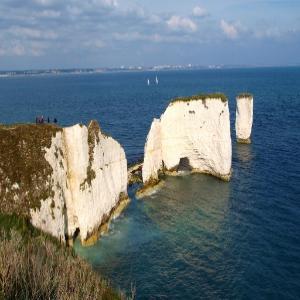
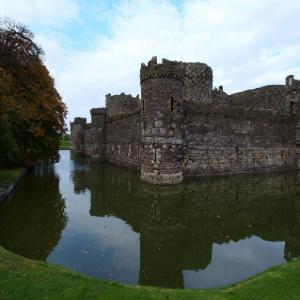
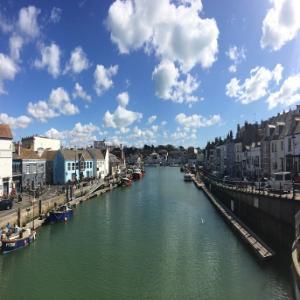 The coast of the United Kingdom has a remarkable history that intertwines its unique cultural and biological characteristics. This course explores coastal and nearshore maritime environments during a 3-week journey around the UK. Students will learn how the coasts were formed and adapted to by a fascinating variety of plants, animals, and human cultures. Some of these organisms and peoples are still around today while others are long gone, leaving behind only their fossilized remains or archaeological evidence. This experiential learning course will begin in London's Natural History Museum, move to the Jurassic Coast and English Channel, the southwest coast of Wales, on to northeast England and the North Sea, then finish back in London. In addition to meeting with local scientists, fishermen, and conservation specialists along the way, students will also engage with their faculty guides and fellow students from the US, Wales and England for maximum cultural immersion.
Coastal Biology & Culture, Credits: 4
Natural History & Culture, Credits: 2
Summer A course
DOWNLOAD SYLLABUS
- FAS 4932 - UF in the UK - Coastal Biology, Natural History & Culture (Summer 2023) Syllabus.pdf
- FAS 4932 - UF in the UK - Coastal Biology, Natural History & Culture (Course Flyer).pdf
- FAS 4932 - UF in the UK - Coastal Biology, Natural History & Culture (2023 Itinerary).pdf
LAB/FIELD COMPONENT
This is a study abroad course traveling to locations in England and Wales.
COURSE ATTRIBUTES
- face-to-face, summer, undergraduate
INSTRUCTOR(S)
-
FAS 5015 | Aquaculture I
COURSE DESCRIPTION
Provides an overview of the field of aquaculture, including water quality, production systems, nutrition, spawning, and the common fish and invertebrate groups cultured in the United States. The course is entirely web-based, with video lectures followed by readings and other resources for each learning topic.
Credits: 3
DOWNLOAD SYLLABUS
LAB/FIELD COMPONENT
There are no labs or field work in this course.
COURSE ATTRIBUTES
- fall, graduate, online or flexible
INSTRUCTOR(S)
-
FAS 5203 | Biology of Fishes
COURSE DESCRIPTION
This 3-hour on-line graduate course is a survey of the diversity of fishes, including their anatomy, taxonomy, ecology, and conservation. Evolutionary trends are stressed, along with biogeography and biodiversity hotspots. The last section of the course is focused on fish ecology and conservation.
Credits: 3
Prerequisites: graduate student standing
DOWNLOAD SYLLABUS
LAB/FIELD COMPONENT
- This course involves online discussion and assignments.
COURSE ATTRIBUTES
- fall, graduate, online or flexible
INSTRUCTOR(S)
Will Patterson
-
FAS 5203C | Biology of Fishes
COURSE DESCRIPTION
Course will focus on the general biology of fishes, with emphasis on trends in their evolution, integrative and sensory biology, physiology, feeding ecology, reproduction, growth, and population dynamics as they relate to fisheries.
Credits: 4
Prerequisites: BSC 2011 and BSC 2011L
DOWNLOAD SYLLABUS
LAB/FIELD COMPONENT
This course involves online laboratory assignments and assessments.
COURSE ATTRIBUTES
- fall, graduate, online or flexible
INSTRUCTOR(S)
-
FAS 5255C | Diseases of Warmwater Fish
COURSE DESCRIPTION
Provides instruction in the methodology of diagnosis, treatment and management of parasitic, bacterial, viral, nutritional, and environmental diseases of warmwater food fish and aquarium species.
Credits: 3
Summer C course
DOWNLOAD SYLLABUS
LAB/FIELD COMPONENT
There are no labs or field trips required in this course.
COURSE ATTRIBUTES
- graduate, online or flexible, summer
INSTRUCTOR(S)
-
FAS 5276C | Field Ecology of Aquatic Organisms
COURSE DESCRIPTION
Historically, this field-oriented course is intended to introduce students to the diverse aquatic habitats found in Florida, their associated flora and fauna, and serve as an introduction to the management issues facing state and federal conservation agencies. However, due to restrictions imposed by the COVID-19 pandemic we are adapting the course to online delivery until further notice!
Students will gain an understanding of plant and animal community structure across a range of ponds, lakes, rivers, and nearshore coastal systems. Virtual (recorded) field trips, live-streamed (synchronous) class meetings, and other video content will comprise approximately 75% of the total class time. Other course materials (field site reports, primary literature, management agency publications, and other online content) will constitute the remaining 25%. Enrollment includes advanced undergraduates and graduate students.
Credits: 3
Prerequisite: FAS4305C or consent of instructor
Summer A course
DOWNLOAD SYLLABUS
LAB/FIELD COMPONENT
This course includes required lab/field work which are offered online during COVID-19.
COURSE ATTRIBUTES
- face-to-face, graduate, online or flexible, summer
INSTRUCTOR(S)
Donald Behringer
-
FAS 5335C | Applied Fisheries Statistics
COURSE DESCRIPTION
This course covers mathematical distributions, transforming data, outliers, significant figures, number of samples needed, effect of sampler size, sample design, mark-recapture and depletion methods of estimating abundance, length-frequency analysis, length-weight relationships (K, Wr, ANOCOVA), and basic statistical tests (e.g., t-tests, paired t-tests, tests of normality, correlations, simple ANOVAs, regression analysis). Additional topics will include ratios, pseudo-replication, nonparametric statistics, repeated-measures ANOVA, multiple comparison testing, and variable selection techniques. Handouts (computer printouts and primary literature) will be used extensively as supporting materials. Students will learn the basics of SAS (Statistical Analysis System) and JMP programming for data management and analysis. Each student will conduct an independent “sampling” project on a fisheries or aquatic science topic of their choice, including review of the literature, proposal and budget preparation, completion of field and/or laboratory work, and preparation of paper and oral presentation based on their research. Outcomes: Students who successfully complete this course will be able to effectively organize data (past or future) apply appropriate statistical tests, and have a critical understanding of methods of sampling and analysis.
Credits: 4
Offered in even years only.
DOWNLOAD SYLLABUS
LAB/FIELD COMPONENT
This course includes required lab/field work which can be conducted independently during COVID-19.
COURSE ATTRIBUTES
- face-to-face, fall, graduate, online or flexible
INSTRUCTOR(S)
-
FAS 5407 | Biology & Ecology of Fisheries & Aquaculture Invertebrates
COURSE DESCRIPTION
Invertebrate animals (e.g. mollusks, crustaceans, echinoderms) comprise about 99% of described species. Many are important fisheries and some are increasingly important in aquaculture. Invertebrates are more anatomically and biologically diverse than finfish, and this diversity must be understood in order to study their fishery management or aquaculture. This course will examine the biology of marine and freshwater invertebrates that are important as fisheries or in aquaculture. Topics will include taxonomy, morphology, distribution, habitat requirements, nutrition, major predators and parasites, significant ecological interactions, and life cycles. Non-food fisheries, such as commercial sponges and pearl oysters, will also be included. The course will be organized by taxonomic groupings, or phyla. Topics will be chosen for their biological relevance to fisheries and aquaculture, but procedural topics (methods, management, models, etc.) will not be emphasized here.
See here for short video description of course.
Credits: 3
Summer C, odd-numbered years only
DOWNLOAD SYLLABUS
LAB/FIELD COMPONENT
There are no labs or field trips associated with this course.
COURSE ATTRIBUTES
- graduate, online or flexible, summer
INSTRUCTOR(S)
Patrick Baker
-
FAS 5901 | Scientific Thinking in Ecology
COURSE DESCRIPTION
A key intent of the Fisheries and Aquatic Sciences degree programs is to teach you how to understand and perform science. The objectives of this course are to examine what science is, why we do it, and some of the practical and ethical considerations of science.
The course will be divided into three sequential modules. In the first module, we will examine the history of science as a way to understand what it is that we call science, and how we got here. Science, as a term and a concept, is relatively recent, yet knowledge advanced before “science” existed. What is it about science that makes it a useful way of thinking? Advances in assumptions, logic, the scientific method, and probability will all be examined.
In the second module, we will survey different approaches to conducting science. Fisheries and ecology share methods with many other disciplines, but there are other models. Medical science, for example, focuses on ethics and liability in ways that can alter the approach to experiments. Manipulative experiments are often impossible in astronomy and geology, yet few would argue that they are not sciences. Statistics are often regarded as simply a way to process data, but there is a reason for statistical analysis that is fundamental to scientific thinking.
In the final module, some of the challenges facing science will be discussed. What are bad science, pseudoscience, and scientific fraud? When is skepticism useful for science, and when is counter to our quest for knowledge? What sorts of biases can creep into science, and how can we avoid them?
Credits: 2
DOWNLOAD SYLLABUS
LAB/FIELD COMPONENT
- This course does not require lab/field components
COURSE ATTRIBUTES
- face-to-face, fall, graduate
INSTRUCTORS
- Dr. Patrick Baker
-
FAS 6154 | Marine Adaptations: Environmental Physiology
COURSE DESCRIPTION
This course will focus on the responses of species and habitats to stressors encountered in the marine environment. We will first examine the physiological responses to salinity, hypoxia, ocean acidification, thermal stress, pollutants, nitrogen stress, UV radiation, and noise. Then we will explore these physiological stressors as drivers of marine ecological processes. Examples will be drawn from a wide array of marine habitats including estuarine, coastal, polar, coral reef, benthic, rocky intertidal, marsh, and pelagic. Finally, we will discuss societal, economic, and management implications.
Credits: 3
Prerequisites: : BSC 2010 and 2011 or equivalent; courses in animal physiology and ecology are recommended.
DOWNLOAD SYLLABUS
LAB/FIELD COMPONENT
There are no labs or field work required for this course.
COURSE ATTRIBUTES
- fall, graduate, online or flexible
INSTRUCTOR(S)
-
FAS 6165 | Fish & Crustacean Nutrition
COURSE DESCRIPTION
This course will acquaint students with basic principles of nutrition and formulation of diets for fish and crustaceans in aquaculture. Lectures will cover digestive physiology, nutrients, feed formulation, and specific nutritional requirements for numerous aquatic organisms. Lectures will cover digestive physiology, nutrients, feed formulation, and specific nutritional requirements for numerous aquatic organisms. Students will be required to give one oral presentations on assigned topics using PowerPoint and narrating it in Voicethread. Students will watch the other student lectures and participate in online discussion of the topics covered.
Credits: 3
DOWNLOAD SYLLABUS
LAB/FIELD COMPONENT
- There are no labs or field trips associated with this course.
COURSE ATTRIBUTES
- graduate, online or flexible, spring
INSTRUCTOR(S)
-
FAS 6176 | Algae Biology & Ecology
COURSE DESCRIPTION
Covers the biology and ecology of aquatic algae, including evolution, classification, structure, photosynthesis, growth, and eproduction. Emphasis on the ecological role of algae in different aquatic ecosystems (e.g. open ocean, estuaries, coral reefs, rocky intertidal), their impacts (e.g. harmful algae blooms, food webs), and their applications (e.g. food, biochemical).
Credits: 3
Prerequisites: BSC2010 and BSC2010L or equivalent
DOWNLOAD SYLLABUS
LAB/FIELD COMPONENT
There are no labs or field work in this course.
COURSE ATTRIBUTES
- graduate, online or flexible, spring
INSTRUCTOR(S)
-
FAS 6238 | Environmental Fish Physiology
COURSE DESCRIPTION
This course will cover advanced topics on the physiology of fishes, their implications, and applications. We will examine features both common and distinctive, and survey the adaptations of fishes at different levels of biological organization which have allowed them to become by far the most species-rich vertebrate taxa. Maintenance of homeostasis under an array of stressors will be an overarching theme. Through literature review and a final project, students will gain an appreciation for, understanding of, and ability to formulate controlled scientific experiments to generate new knowledge about how fishes function.
Credits: 3
Prerequisites: FAS 6932: Biology of Fishes
Offered Spring of odd years
DOWNLOAD SYLLABUS
LAB/FIELD COMPONENT
- This course does not require lab/field trips.
COURSE ATTRIBUTES
- graduate, online or flexible, spring
INSTRUCTOR(S)
-
FAS 6256 | Fish & Aquatic Invertebrate Histology
COURSE DESCRIPTION
Covers basic interpretation of the fixed tissue microanatomy and physiology of fish, bivalves, and corals, and introduces common histopathologic (disease) findings.
Credits: 3
Offered in odd years.
DOWNLOAD SYLLABUS
LAB/FIELD COMPONENT
There are no labs or field trips associated with this course.
COURSE ATTRIBUTES
- graduate, online or flexible, spring
INSTRUCTOR(S)
-
FAS 6272 | Marine Ecological Processes
COURSE DESCRIPTION
This course is intended to provide students with a broad overview of ecological processes operating in estuarine, near shore coastal and open ocean systems. Initially, students are introduced to important primary producers and secondary consumers in each of these systems. Insights into physiological and population levels of organization build on these basics. Environmental factors that influence species-specific and population level interactions are discussed subsequently as a transition to the concepts of community organization. The major chemical cycles in marine systems (e.g., carbon, nitrogen and phosphorus) are then discussed. All of this material forms a foundation for explaining how the structure and function of communities are maintained over different scales in both time and space.
Credits: 3
Prerequisites: instructor consent
DOWNLOAD SYLLABUS
LAB/FIELD COMPONENT
There are no labs or field trips associated with this course at this time.
COURSE ATTRIBUTES
- fall, graduate, online or flexible
INSTRUCTOR(S)
-
FAS 6273 | Trophic Ecology of Fishes
COURSE DESCRIPTION
Tropic ecology of fishes, including: food habit analyses, diet breadth, diet overlap, prey selectivity, prey digestion, gut evacuation, consumption, food-web linkages, foraging connections through stable isotope ratios, trophic cascades, feeding bioenergetics, and interactions among feeding, growth & reproduction.
Credits: 3
Prerequisites: Biology of Fishes (or equivalent) and STA 6166 (or equivalent)
Offered in odd years.
DOWNLOAD SYLLABUS
LAB/FIELD COMPONENT
There are no labs or field trips associated with this course.
COURSE ATTRIBUTES
- fall, graduate, online or flexible
INSTRUCTOR(S)
-
FAS 6275 | Freshwater Ecology
COURSE DESCRIPTION
This course is designed to provide students with an understanding of key concepts in freshwater ecology. Material will focus on physical and chemical aspects of freshwater ecosystems, major groups of freshwater organisms, and the ecological processes that affect freshwater communities and ecosystems.
Credits: 3
DOWNLOAD SYLLABUS
- FAS 6275 - Freshwater Ecology Syllabus (Online).pdf
- FAS 6275 - Freshwater Ecology Syllabus (Face-to-Face).pdf
LAB/FIELD COMPONENT
There are no labs or field work in this course.
COURSE ATTRIBUTES
- face-to-face, fall, graduate, online or flexible
INSTRUCTOR(S)
-
FAS 6310C | Fish & Limnology
COURSE DESCRIPTION
This course provides students with a basic understanding of fishery and limnological science. Knowledge will be gained through classroom lectures and hands-on experience with a broad array of methods used in fishery science. Research methods will include not only field and laboratory techniques, but also the procedures and formats for data analysis and formulation of management practices for aquatic resources. Fishery science encompasses a variety of scientific disciplines including physics, chemistry, and biology. Specific items that will be address in this course include: (1) structure and function of aquatic habitats, (2) limnological laboratory and field procedures, (3) fish sampling and study methods, (4) analysis and reporting of limnological and fishery data, and (5) an overview of some important Florida aquatic resource issues.(Course is co-taught with FAS4305C).
Credits: 3
DOWNLOAD SYLLABUS
LAB/FIELD COMPONENT
- This course includes required labs and field work.
COURSE ATTRIBUTES
- face-to-face, graduate, spring
INSTRUCTOR(S)
-
FAS 6306C | Spatial Sciences for Marine Environmental Characterization
COURSE DESCRIPTION
An introduction to the geospatial technologies, concepts and methods required to analyze and manage geographic data used in a context of marine habitat mapping. Learn about the fields of cartography, remote sensing, and geographic information systems (GIS), and how to combine oceanography and marine ecology, geomorphology and biology in order to provide an accurate spatial representation of marine habitats.
Credits: 3
DOWNLOAD SYLLABUS
LAB/FIELD COMPONENT
- This course has required labs that can be completed online or in person.
COURSE ATTRIBUTES
- face-to-face, fall, graduate, online or flexible
INSTRUCTOR(S)
-
FAS 6337C | Fish Population Dynamics
COURSE DESCRIPTION
Analyzing fish populations for management purposes. Methods for estimating population parameters such as growth, recruitment, and mortality. Using population parameters and computer models to predict yield and catch composition, and bioenergetics approaches for fisheries management problems.
Credits: 4
Prerequisites: STA 6166 (or equivalent)
DOWNLOAD SYLLABUS
LAB/FIELD COMPONENT
There are no labs or field trips associated with this course.
COURSE ATTRIBUTES
- fall, graduate, online or flexible
INSTRUCTOR(S)
Zachary Siders
(352) 273.3644
-
FAS 6339C | Advanced Quantitative Fisheries Assessment
COURSE DESCRIPTION
Covers topics related to fisheries stock assessment and management. This course focuses on modern assessment techniques and their associated challenges.
Credits: 4
Prerequisites: FAS 6337C Fish Population Dynamics
DOWNLOAD SYLLABUS
LAB/FIELD COMPONENT
There are no labs or field trips associated with this course.
COURSE ATTRIBUTES
- graduate, online or flexible
INSTRUCTOR(S)
-
FAS 6355C | Fisheries Management
COURSE DESCRIPTION
Integrating scientific, social, political, and legal factors in fisheries management.
Credits: 4
Prerequisites: A graduate course in Ecology, Statistics or Fisheries Management. Knowledge of R and/or ArcGIS is helpful.
DOWNLOAD SYLLABUS
LAB/FIELD COMPONENT
There are no labs or field trips associated with this course at this time.
COURSE ATTRIBUTES
- face-to-face, fall, graduate, online or flexible
INSTRUCTOR(S)
-
FAS 6356 | Fisheries Enhancement
COURSE DESCRIPTION
Fisheries enhancements are a set of fisheries management approaches involving the release of cultured organisms to enhance or restore fisheries. The course aims to provide participants with the knowledge and skills required for assessing where and when enhancements can contribute to fisheries management goals, and for developing and managing such initiatives effectively. Throughout the course, students apply concepts and methods to an enhancement fishery case study of their choice and present results of their assessments orally and in writing.
Credits: 2
Prerequisites: instructor consent
DOWNLOAD SYLLABUS
LAB/FIELD COMPONENT
There are no labs or field trips associated with this course at this time.FAS 6356 | Fisheries Enhancement
COURSE ATTRIBUTES
- face-to-face, graduate, online or flexible, summer
INSTRUCTOR(S)
-
FAS 6357 | Marine Protected Areas
COURSE DESCRIPTION
Discusses the advantages and disadvantages of marine protected areas (MPA), including the scientific basis and the traditional approach to fisheries management. Covers the ecological principles which guide the creation of MPAs, and the monitoring and documentation necessary to determine MPA success or failure.
Credits: 3
DOWNLOAD SYLLABUS
LAB/FIELD COMPONENT
- There are no labs or field work associated with this course.
COURSE ATTRIBUTES
- fall, graduate, online or flexible
INSTRUCTOR(S)
-
FAS 6360 | Invasion Ecology of Aquatic Animals
COURSE DESCRIPTION
This course will provide a comprehensive overview of the field of invasion ecology and will emphasize aspects related to aquatic animals. Through lectures, readings, discussions, and invited expert speakers, students will be presented the ecological concepts and debates underlying this developing field; the biology and life history of nonnative aquatic animals, including characteristics of successful invaders (emphasis on Florida); risk analysis methodology; and the conservation and regulatory implications of nonnative aquatic species.
Credits: 3
Prerequisites: instructor consent
Offered in even years only.
DOWNLOAD SYLLABUS
LAB/FIELD COMPONENT
- There are no labs or field work in this course.
COURSE ATTRIBUTES
- graduate, online or flexible, spring
INSTRUCTOR(S)
-
FAS 6408 | Aquaculture II
COURSE DESCRIPTION
Aquaculture II will build upon the foundations of the Aquaculture I course (FAS 5015). Students will be exposed to more advanced concepts including aquaculture engineering and system design; broodstock management; live feeds and algae production; economics and marketing; as well as biosecurity. Application of principles and concepts presented in this class will be emphasized. At the conclusion of this course students should have a firm grasp of critical concepts in aquaculture and be better prepared for careers in private, state, and federal organizations as well as academia.
Credits: 3
Prerequisites: n/a
DOWNLOAD SYLLABUS
LAB/FIELD COMPONENT
- There are no labs or field work in this course.
COURSE ATTRIBUTES
- graduate, online or flexible, spring
INSTRUCTOR(S)
-
FAS 6705 | Fisheries and Aquaculture: An Economics Perspective
COURSE DESCRIPTION
This course introduces students to important issues in fisheries and aquaculture management from an economic perspective, exploring the incentives of various stakeholders in utilizing and conserving fisheries resources, as well as the impacts and effects of differing management systems on industry and ecosystems. Appropriate for students with little or no background in economics or fisheries sciences.
Credits: 3
DOWNLOAD SYLLABUS
LAB/FIELD COMPONENT
There are no labs or field trips associated with this course.
COURSE ATTRIBUTES
- fall, graduate, online or flexible
INSTRUCTOR(S)
-
FAS 6905 | Individual Study
COURSE DESCRIPTION
Individual study of a selected topic in fisheries and aquatic sciences as contracted with the instructor at the start of the term.
Credits: variable (1-6). Can be repeated with change of topic up to 10 credits.
DOWNLOAD SYLLABUS
- n/a
LAB/FIELD COMPONENT
This course is individualized per student.
COURSE ATTRIBUTES
- face-to-face, fall, graduate, online or flexible, spring, summer
INSTRUCTOR(S)
Obtain approval from an FAS faculty member for supervision of these credits.
-
FAS 6910 | Supervised Research
COURSE DESCRIPTION
Firsthand, authentic research in fisheries and aquatic sciences under the supervision of a faculty member. Projects may involve inquiry, design, investigation, scholarship, discovery or application.
Credits: variable (1-5). Can be repeated with change of topic up to 5 credits.
DOWNLOAD SYLLABUS
- n/a
LAB/FIELD COMPONENT
This course is individualized per student.
COURSE ATTRIBUTES
- face-to-face, fall, graduate, online or flexible, spring, summer
INSTRUCTOR(S)
Obtain approval from an FAS faculty member for supervision of these credits.
-
FAS 6932 | Fish & Water Quality
COURSE DESCRIPTION
This course discusses International, Federal, and State of Florida water quality standards and how each standard affects fish. Students learn the facts behind the establishment of each standard, sources of the materials and the interactions between various water chemistry parameters that occur in a lake or body of water. This course uses the Canadian Guide to Water Quality as the primary reference source and relates Canadian standards to USEPA and Florida standards and guidelines. The course is a discussion class graded on the S/U basis.
Credits: 3
Offered in odd years.
DOWNLOAD SYLLABUS
LAB/FIELD COMPONENT
- This course includes required labs and field work.
COURSE ATTRIBUTES
- face-to-face, fall, graduate
INSTRUCTOR(S)
Dan Canfield Jr.
-
FAS 6932 | Global Change in Freshwater Ecosystems
COURSE DESCRIPTION
This course is designed to provide students with an understanding of human impacts in freshwater ecosystems and challenges and approaches for conserving freshwater diversity and ecosystem services.
Credits: 3
DOWNLOAD SYLLABUS
LAB/FIELD COMPONENT
- There are no labs or field work in this course.
COURSE ATTRIBUTES
- graduate, online or flexible, spring
INSTRUCTOR(S)
-
FAS 6932 | Reproductive Dynamics of Fish and Fisheries
COURSE DESCRIPTION
This course covers reproductive biology and ecology of fishes in relation to fisheries and fisheries management, including: reproductive modes and cycles, gonad development and staging, spawning duration and season, fecundity, sexual maturity, spawning aggregations, and latitudinal/spatial variation in reproductive dynamics.
Credits: 2
Prerequisites: Course in fish biology (e.g., Biology of Fishes or equivalent) and statistics (STA 2023 or higher); students should be familiar with the basic use of Excel but experience with SAS or R is not required (programs will be provided).
Offered during Summer B in even years.
DOWNLOAD SYLLABUS
LAB/FIELD COMPONENT
- There are no labs or field trips associated with this course.
COURSE ATTRIBUTES
- graduate, online or flexible, summer
INSTRUCTOR(S)
-
FAS 6932 | UF in the UK: Coastal Biology, Natural History & Culture
COURSE DESCRIPTION
The coast of the United Kingdom has a remarkable history that intertwines its unique cultural and biological characteristics. This course explores coastal and nearshore maritime environments during a 3-week journey around the UK. Students will learn how the coasts were formed and adapted to by a fascinating variety of plants, animals, and human cultures. Some of these organisms and peoples are still around today while others are long gone, leaving behind only their fossilized remains or archaeological evidence. This experiential learning course will begin in London's Natural History Museum, move to the Jurassic Coast and English Channel, the southwest coast of Wales, on to northeast England and the North Sea, then finish back in London. In addition to meeting with local scientists, fishermen, and conservation specialists along the way, students will also engage with their faculty guides and fellow students from the US, Wales and England for maximum cultural immersion.
Coastal Biology & Culture, Credits: 4
Natural History & Culture, Credits: 2
Summer A course
DOWNLOAD SYLLABUS
- FAS 6932 - UF in the UK - Coastal Biology, Natural History & Culture (2023 Syllabus).pdf
- FAS 6932 - UF in the UK - Coastal Biology, Natural History & Culture (Course Flyer).pdf
- FAS 6932 - UF in the UK - Coastal Biology, Natural History & Culture (2023 Itinerary).pdf
LAB/FIELD COMPONENT
- This is a study abroad course traveling to locations in England and Wales.
COURSE ATTRIBUTES
- face-to-face, graduate, summer
INSTRUCTOR(S)
-
FAS 6933 | Seminar
COURSE DESCRIPTION
This course provides Fisheries and Aquatic Sciences (FAS) graduate students a forum for honing scientific presentation skills.
Credits: 1; can be taken for a total of 2.
Co-requisite: students enrolled in Seminar must participate in the FAS Graduate Symposium
DOWNLOAD SYLLABUS
- Not available
LAB/FIELD COMPONENT
- There are no labs or field trips associated with this course, although attending the Graduate Symposium is required.
COURSE ATTRIBUTES
- face-to-face, spring, graduate, online-or-flexible
INSTRUCTOR(S)
Varies
-
FAS 6940 | Supervised Teaching
COURSE DESCRIPTION
Credits earned in fulfillment of assisted teaching duties for fisheries and aquatic sciences.
Credits: 1-5; max 5 total
DOWNLOAD SYLLABUS
- Not applicable
LAB/FIELD COMPONENT
- Teaching assistant duties may require attendance at labs and field trips.
COURSE ATTRIBUTES
- face-to-face, fall, spring, graduate, summer, online-or-flexible
INSTRUCTOR(S)
Contact the graduate student services office or graduate coordinator for your program to connect with a course/instructor in need of teaching assistance.
-
FAS 6971 | Master’s Research
COURSE DESCRIPTION
Research credits for Master's thesis work, supervised by major advisor/committee chair.
Credits: 1-15
Grading scheme: S/U
DOWNLOAD SYLLABUS
LAB/FIELD COMPONENT
- Research typically involves lab and/or field work, but may vary by individual program.
COURSE ATTRIBUTES
- face-to-face, online-or-flexible, fall, spring, summer, graduate
INSTRUCTOR(S)
Individual graduate advisor/committee chair oversees student progress.
-
FAS 7979 | Advanced Research
COURSE DESCRIPTION
Research credits for doctoral study work undertaken prior to or during qualifying exams, supervised by major advisor/committee chair.
Credits: 1-15
Grading scheme: S/U
DOWNLOAD SYLLABUS
LAB/FIELD COMPONENT
- Research typically involves lab and/or field work, but may vary by individual program.
COURSE ATTRIBUTES
- face-to-face, online-or-flexible, fall, spring, summer, graduate
INSTRUCTOR(S)
Individual graduate advisor/committee chair oversees student progress.
-
FAS 7980 | Doctoral Research
COURSE DESCRIPTION
Research credits for doctoral study work undertaken after successfully completing qualifying exams, supervised by major advisor/committee chair.
Credits: 1-15
Prerequisites: doctoral candidate status (post-qualifying exams).
Grading scheme: S/U
DOWNLOAD SYLLABUS
LAB/FIELD COMPONENT
- Research typically involves lab and/or field work, but may vary by individual program.
COURSE ATTRIBUTES
- face-to-face, fall, graduate, online-or-flexible, spring, summer
INSTRUCTOR(S)
Individual graduate advisor/committee chair oversees student progress.